

Disclaimer
This article is for educational and informational purposes only. It is not legal advice. Every family’s situation is unique, and this content is meant to help you think more clearly and strategically about co-parenting, not replace professional guidance.
Why Co-Parenting Feels Harder Than it Should
Most parents do not wake up wanting conflict.
They want calm exchanges.
They want predictability.
They want their kids to feel safe and settled.
Yet many co-parents find themselves stuck in cycles of tension, miscommunication, and repeated disputes. Conversations spiral. Schedules feel fragile. Every small issue carries outsized emotional weight.
The common belief is that this happens because people are difficult, uncooperative, or unwilling to change.
In reality, most co-parenting breakdowns are structural problems, not personal ones.
When structure fails, people default to emotion, urgency, and reaction. That is not a character flaw. That is what humans do when systems do not support them.
This is the problem a true co-parenting reset is meant to solve.
What Transformational Resilience Actually Means in Co-Parenting
Transformational resilience is not about pushing through pain or “handling it better.”
It is the ability to rebuild forward after disruption, using structure instead of survival.
In co-parenting, that means shifting from:
reacting to problems
to designing systems that prevent problems from escalating
That shift requires a framework. That framework is C2R2E.
The C2R2E Framework Applied to Co-Parenting
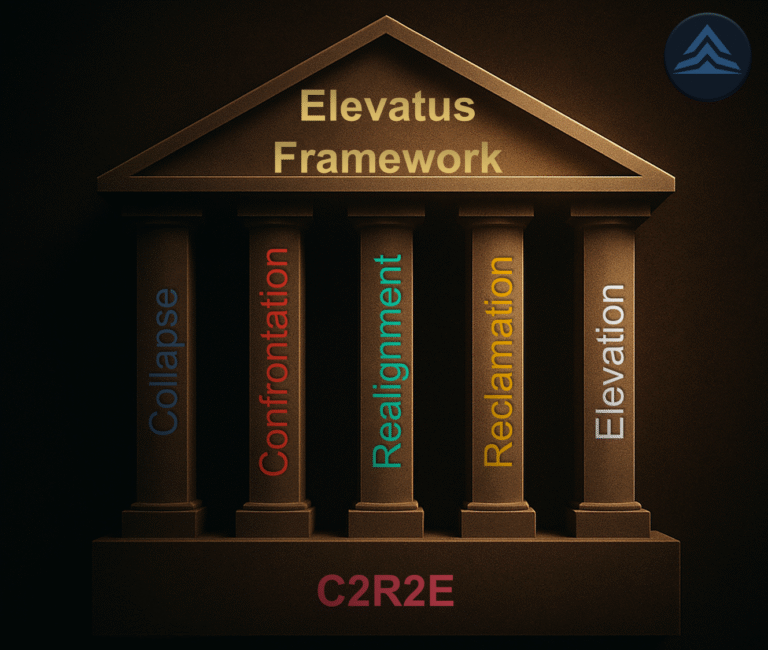
Collapse
This is the moment you acknowledge that something is not working. The plan may exist, but it does not hold up under real life conditions.
Confrontation
This is where you separate facts from assumptions. You look at where ambiguity exists, where expectations are unclear, and where conflict repeatedly originates.
Realignment
This is the heart of the reset. You rebuild structure. You clarify roles, language, decision points, and processes so fewer things are left open to interpretation.
Reclamation
As structure improves, emotional intensity drops. Parents regain agency. Interactions become more predictable. Children experience more stability.
Elevation
The goal is not perfection. The goal is a co-parenting system that models calm leadership, clear boundaries, and consistency for children.
That is transformational resilience in practice.
The Real Question Many Single Parents are Trying to Answer
After years of navigating court, conflict, and uncertainty, one question kept coming up for me and for the parents I later worked with:
What actually makes a parenting plan a good parenting plan?
Not one that looks good on paper.
Not one that sounds fair in theory.
One that holds up in real life.
That question became the problem I set out to solve.
What is an Ironclad Parenting Plan?
The Ironclad Parenting Plan System is an educational framework designed to teach parents how to think strategically about co-parenting structure.
It is not legal advice.
It is not a one-size-fits-all template.
It is a way of understanding:
what variables matter in real-world parenting
how wording impacts conflict
how clarity reduces interpretation
how dispute resolution can be built into the plan before conflict escalates
The system examines over 60 core variables involved in parenting arrangements. These variables include communication boundaries, transitions, decision-making processes, scheduling expectations, how disagreements are handled when they arise, and much more.
The goal is simple:
reduce friction by reducing ambiguity.
This framework is designed to be useful whether a parent is represented or unrepresented and to support collaboration, mediation, or structured negotiation when needed.
The Parenting Plan Reset Guide: Where Most Parents Should Start
The Parenting Plan Reset Guide is the entry point.
It helps parents slow down and evaluate:
where their current plan is unclear
which variables are undefined or assumed
why certain wording matters
how structure can deter conflict before it starts
The guide is educational by design. It does not tell parents what to do. It teaches them what to think about and why those considerations matter.
For many parents, this alone creates meaningful insight and relief.
Why Strategic Thinking Changes Everything
Most co-parenting conflict does not come from disagreement.
It comes from interpretation.
When plans rely on “common sense,” good intentions, or flexible language, conflict is inevitable under stress. Strategic structure does not remove humanity from co-parenting. It protects it.
When expectations are clear:
fewer conversations turn into arguments
fewer decisions feel personal
fewer moments escalate unnecessarily
This is why structure is not cold.
It is compassionate.
The Role of the "7 Day Reset"
Before parents can rebuild structure externally, many need to stabilize internally.
The 7 Day Reset exists for that reason.
It is a short, focused reset designed to help parents:
regain clarity
regulate emotional reactivity
step out of constant urgency
prepare mentally for structural change
It is not about fixing the other parent.
It is about leading yourself first.
Why Reach out to Elevatus for Co-Parenting Support
Elevatus exists to help people rebuild after disruption with clarity and structure.
In co-parenting, that means:
teaching strategic thinking
offering frameworks grounded in lived experience and research
focusing on prevention rather than reaction
helping parents move from survival to stability
The goal is not endless coaching.
The goal is durable systems.
Final Thought
Co-parenting does not improve through willpower alone.
It improves when structure supports behavior instead of fighting it.
That is the heart of transformational resilience.
That is the purpose of C2R2E.
That is why the Ironclad Parenting Plan System exists.
Not to control.
Not to escalate.
But to create stability that lasts.
🔄Did you find this article helpful? Share it!

About the Author - Danny DeJesus
Danny De Jesus is a transformational resilience thought leader, strategic thinker, and the founder of Elevatus Coaching—a practice built to help people rebuild their lives after major change. Drawing from his own experiences with divorce, co-parenting, and career shifts, he created the C2R2E Framework to guide people from collapse to elevation with clarity and confidence. Through the Elevatus Blog, he shares insights for anyone navigating disruption, rebuilding direction, or shaping a new chapter with purpose.