
Life transitions can feel like fog, especially when the old plan stops working and the next plan is not clear yet. On The Next Baseline, Danny DeJesus reframes that fog as information, not a verdict. Uncertainty is common during divorce recovery, burnout recovery, career change, military transition, health struggles, and co-parenting stress because those disruptions rarely stay in one lane. A “job change” touches identity and confidence. A “relationship change” touches routines, finances, parenting, and social circles. When multiple areas shift at once, it’s easy to assume something is wrong with you, but the clearer read is often this: your life is changing faster than your language for it. Naming the season gives you leverage because you can respond with intention instead of panic.
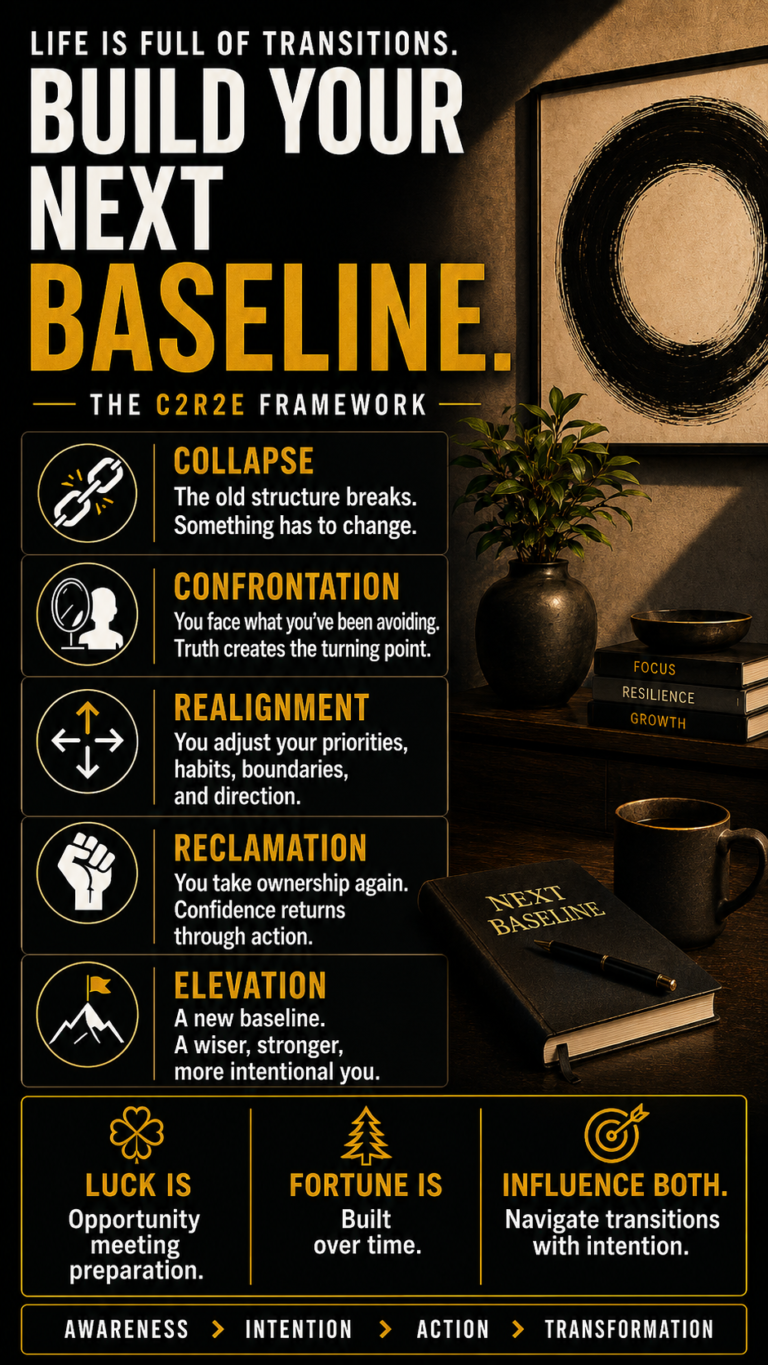
Danny’s life transition framework, C2R2E, offers that language in five phases: collapse, confrontation, realignment, reclamation, and elevation. Collapse is the moment a structure can’t carry you anymore, not always total destruction but a clear signal that the current way of living is no longer sustainable. Confrontation is the hard, honest look at what the transition is revealing, patterns you repeat, habits you protect, fears you avoid, and emotional reactions that keep you stuck. Without confrontation, people swap settings but keep the same cycle, like changing relationships yet recreating the same ending. This is where personal development gets practical: truth first, then movement. The discomfort is part of the work, not proof you’re doing it wrong.
Realignment turns awareness into a new operating system. It means adjusting routines, boundaries, priorities, relationships, and even your definition of success around what is true now. Values sit at the center because values and core beliefs quietly steer long-term outcomes. If you want a different future, you often need different standards, different inputs, and different “yes” and “no” decisions. Reclamation follows as you take ownership again. Confidence returns through deliberate actions, kept commitments, and small proofs that you can move forward even when you don’t feel ready. Instead of waiting for motivation, you build capacity and capability, which is a cornerstone of resilience coaching and sustainable behavior change.
Elevation is the new baseline. It’s not perfection, and it’s not rewriting history to pretend the collapse never happened. It’s operating with more wisdom, intention, and resilience because you’ve integrated what you learned. From there, Danny makes a key distinction for goal setting and long-term success: luck versus fortune. Luck is opportunity meeting preparation, often sparked by an unexpected conversation, timing, or a door that appears because you put yourself in the right environment. Fortune is built over time through repeated decisions, reputation, discipline, relationships, emotional control, health habits, and consistency. When you move through transitions with awareness, you stop living only in survival mode, notice opportunities faster, and make small shifts that compound into better fortune. The practical takeaway is simple: identify your current phase, then choose one intentional step you can take in the next 30 days.
🔄Did you find this article helpful? Share it!

About the Author - Danny DeJesus
Danny De Jesus is a transformational resilience thought leader, strategic thinker, and the founder of Elevatus Coaching—a practice built to help people rebuild their lives after major change. Drawing from his own experiences with divorce, co-parenting, and career shifts, he created the C2R2E Framework to guide people from collapse to elevation with clarity and confidence. Through the Elevatus Blog, he shares insights for anyone navigating disruption, rebuilding direction, or shaping a new chapter with purpose.