
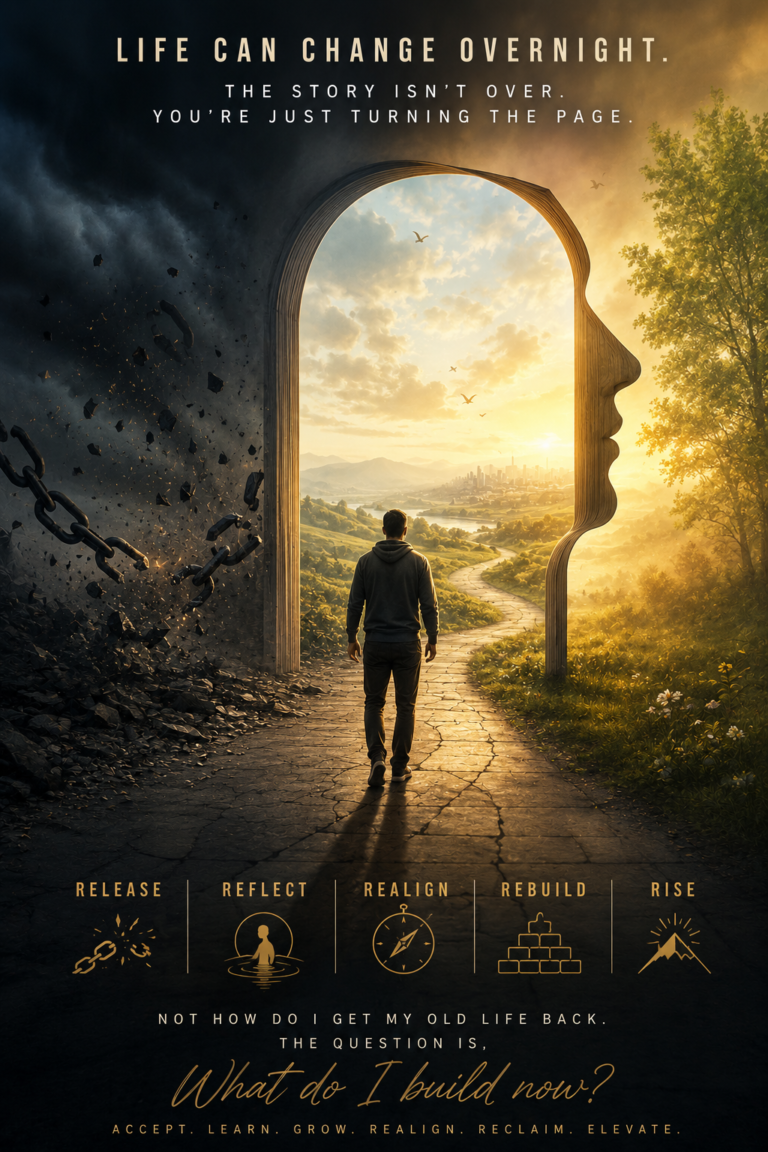
Most life resets don’t start with a dramatic collapse. They start quietly with small decisions, overlooked warning signs, and shifting priorities that feel harmless in the moment. Then a breakup, career change, health diagnosis, financial setback, or family conflict hits and it feels like life changed overnight. That shock is real, but it can also be misleading. When we look back honestly, we often see weeks, months, or years of patterns that led to the turning point. Recognizing that slow build matters because it turns “bad luck” into usable information for personal growth and long-term resilience.
A helpful way to understand life transitions is to think like a storyteller. In movies, we remember the big scenes: the betrayal, the failure, the crisis, the victory. But every character’s turning point is set up by a backstory and a chain of choices. Real life works the same way. You are the main character in your own story, and every chapter prepares the next one whether you notice it or not. That framing is powerful during a life disruption because it shifts you from helplessness to clarity. The point isn’t to blame yourself for what happened, but to see the sequence so you can choose differently going forward.
Disruption is not the exception to life. Jobs change, kids grow up, friendships evolve, communities shift, and family dynamics rearrange after loss, conflict, or time. Even identity can expire when the version of you that survived one season no longer fits the person you’re becoming. Many people get stuck not because change arrived, but because they keep trying to rebuild on something that no longer exists. A life reset demands acceptance before strategy. You can grieve what you had, honor what it meant, and still admit that the old structure won’t hold your future.
Modern culture can make that acceptance harder. Social media trains us to compare our behind-the-scenes to someone else’s highlight reel, and it rewards instant gratification over long-term connection. We see outcomes without the sacrifices and we see success without the collapse that often came first. That distortion can make your own struggle feel isolating or shameful, even though life transitions are universal. When you remember that collapse and change are part of the human pattern, you stop treating your hardship like proof you failed and start treating it like a signal to realign your life.
One practical roadmap for transformational resilience is the C2R2E life transition framework: Collapse, Confrontation, Realignment, Reclamation, Elevation. Something falls apart, you confront the truth of the current reality, you realign around what’s true, you reclaim your agency and voice, and you elevate into a new baseline. The goal is not to go backward, because the past won’t return, but to build forward with intention. Try a simple reflection to start: What are you holding on to that no longer fits this season? If you stopped recreating the past, what would you build instead?
🔄Did you find this article helpful? Share it!

About the Author - Danny DeJesus
Danny De Jesus is a transformational resilience thought leader, strategic thinker, and the founder of Elevatus Coaching—a practice built to help people rebuild their lives after major change. Drawing from his own experiences with divorce, co-parenting, and career shifts, he created the C2R2E Framework to guide people from collapse to elevation with clarity and confidence. Through the Elevatus Blog, he shares insights for anyone navigating disruption, rebuilding direction, or shaping a new chapter with purpose.